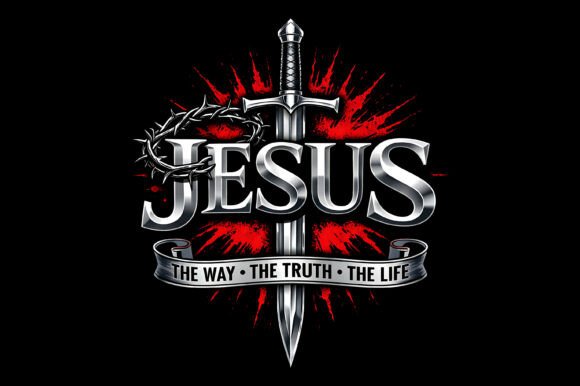
Jesus Way Truth Life Christian Sword
A Designer’s First Glance: Clean, Reverent, and Ready for Real Fabric
When I opened Jesus Way Truth Life Christian Sword for the first time, my eye went straight to the balance—how the sword anchors the composition while the words flow with quiet authority. It’s not flashy or ornate; it’s centered, legible, and carries a calm weight. As someone who’s stitched hundreds of faith-based designs for boutique apparel, nursery decor, and personalized gifts, I appreciate when a design respects both spiritual gravity and embroidery practicality. This one does. It reads clearly at 3.5 inches wide—ideal for a tote bag front, a sweatshirt chest placement, or a baby onesie above the pocket.
Where It Shines: Real Projects, Real Customers
I recently prepped a small batch of organic cotton aprons for a local kitchenware shop—and Jesus Way Truth Life Christian Sword was the top contender for their “Faith & Flavor” line. Why? Because it stitches cleanly across varied fabric textures without overwhelming the garment. On medium-weight cotton twill, the satin-stitched sword blade held sharp edges, and the lettering stayed crisp using standard 40-weight polyester thread. No puckering. No thread breaks.
It also translated beautifully onto a lightweight linen tea towel—no stabilizer overkill needed, just a light tear-away. That matters for craft businesses turning out holiday embroidery: consistent stitch-out means faster turnaround and fewer rejects. For Etsy sellers listing embroidered patches, this design scales well down to 2.75 inches without losing legibility—great for iron-on or sew-on applications on caps, backpacks, or denim jackets.
As a digital embroidery file in the Crafts category, it’s versatile but not generic. It avoids cliché flourishes (no doves, no stained-glass borders), so it fits modern-minimalist branding as easily as traditional church merchandise. Small shop owners building cohesive product lines will find it pairs naturally with neutral palettes—charcoal, oat, navy, cream—without demanding specific thread colors to “work.”
Where to Pause—and Test First
Don’t assume it’s foolproof on every surface. I tried Jesus Way Truth Life Christian Sword on a stretchy bamboo-blend knit (for a custom nursing top) and saw slight distortion in the vertical sword shaft. Not a dealbreaker—but a reminder: always test on scrap fabric *with your exact stabilizer stack*. Lightweight cutaway + topping worked best for that application.
On dark fabrics, the inner text detail holds up—if you use bright white or ecru thread. But avoid pale gold or pastel threads unless you’re stitching on ivory or cream; contrast drops fast. And while the design isn’t overly dense, its fill-stitch sword guard and tight letter spacing mean it’s not ideal for tiny hoops under 4x4 inches without careful digitizing adjustments.
Curved surfaces like baseball caps need re-hooping finesse—the bottom curve of the sword can lift slightly if stabilizer shifts. I recommend basting the cap crown before hooping and using a cap frame with firm tension. Also, skip this design for ultra-thin baby muslin without backing; the lettering’s fine strokes need minimal fabric movement to stay sharp.
What It Adds to Your Finished Product—Beyond the Stitch
Customers notice intention. When you embroider Jesus Way Truth Life Christian Sword on a handmade pillow cover or a personalized baptism gift, it signals thoughtfulness—not just decoration. That builds trust, especially for faith-based buyers who value authenticity over trendiness. I’ve seen repeat orders spike when shops pair this design with simple, high-quality blanks: heavyweight cotton sweatshirts, unbleached canvas totes, or 100% linen napkins.
For creative entrepreneurs, it strengthens brand consistency. Unlike busy script fonts or over-embellished motifs, this design lets the message lead—and your craftsmanship follow. It photographs well in natural light, which lifts your Etsy listings and printable mockups. No need for heavy filters or shadow effects; the clean lines translate directly from hoop to screen.
And yes—it sells. Not because it’s “viral,” but because it meets real needs: a pastor’s gift for a new deacon, a nurse’s scrub top, a teen’s graduation hoodie, a couple’s wedding keepsake blanket. It feels personal without being prescriptive.
Practical Notes Every Embroidery Designer Should Check
- Test first: Run a sample on your target fabric + stabilizer combo—especially for baby embroidery or commercial embroidery runs.
- Review stitch density: The sword’s blade uses smooth satin stitch; ensure your machine handles continuous satin without overheating.
- Confirm hoop size: Most versions fit comfortably in a 5x7 hoop—but verify before batching.
- Inspect small details: Zoom in on the crossbar of the “T” in “Truth” and the serif on the “L” in “Life.” These define clarity at smaller sizes.
- Check thread color contrast: Try black thread on cream fabric and white thread on navy—then compare both in grayscale mockups.
- Stabilizer matters: Medium-weight tear-away works for stable wovens; add cutaway for knits or layered garments like hoodies.
- Licensing check: If selling finished products or reselling the digital embroidery file, confirm usage rights—especially for craft business or Etsy seller distribution.
Final Thought: A Design That Serves the Maker and the Message
Jesus Way Truth Life Christian Sword doesn’t shout. It settles—in the hoop, on the fabric, in the hand of the person receiving it. That’s rare. As a designer who evaluates hundreds of embroidery files a year, I keep returning to this one not because it’s technically perfect in every scenario, but because it’s *thoughtfully calibrated*: for clarity, for reverence, for real-world wear and washing, and for the quiet confidence of a handmade product that means something. Whether you’re stitching a single custom apron or scaling a small shop product line, it earns its place—not as filler, but as foundation.