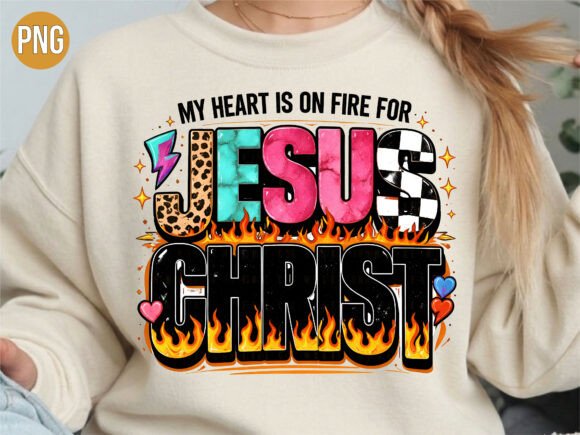
Heart Fire Jesus Christ Christian SHIRT
A Designer’s First Look: Bold Faith, Clean Lines, Real-World Impact
When I opened Heart Fire Jesus Christ Christian SHIRT for the first time, I didn’t see just another faith-based embroidery file—I saw a visual statement that lands with warmth and conviction. The heart shape anchors the design, but it’s the flame rising through its center—stylized yet unmistakable—that gives it movement and energy. The “Jesus Christ” lettering is clean, slightly rounded, and avoids overly ornate serifs, making it legible even at modest sizes. It’s not fussy, not childish, and not so minimalist it loses soul. That balance matters—especially when you’re stitching this onto a custom embroidered tote bag for a church women’s ministry or a soft cotton baby onesie for a baptism gift.
Where This Design Truly Shines (and Where It Asks for Thought)
Heart Fire Jesus Christ Christian SHIRT works exceptionally well on mid-weight to heavy fabrics where stitch definition holds: think cotton-blend sweatshirts, canvas totes, twill aprons, and linen pillow covers. I recently tested it on a navy crewneck sweatshirt for a small shop client—and the contrast between deep fabric and crisp white thread made the flame pop without looking harsh. It also translated beautifully into a stitched patch for a youth group’s volunteer vests: the satin stitch around the heart held clean edges, and the fill stitch in the flame stayed dense without puckering.
For Etsy sellers and craft business owners, this design fits naturally into seasonal and evergreen niches—Easter gifts, back-to-school faith apparel, hospital chaplaincy merchandise, or boutique nursery decor. On a light gray tea towel? Yes—it reads clearly from across the kitchen. On a curved cap front? Proceed with caution: the top curve of the heart and the uppermost flame tip may distort unless you adjust placement or use a smaller scale. And while it’s lovely on baby items, avoid placing it directly over seams or stretchy ribbing on newborn onesies—the stitch density in the flame’s core can pull thin knit fabric if stabilizer isn’t layered thoughtfully.
What Real Embroidery Reveals About Its Craftsmanship
This isn’t a rushed digital sketch masquerading as a machine embroidery design. The transitions between satin-stitched outlines and fill-stitched interiors feel intentional—not overloaded, not underdeveloped. There’s breathing room between letterforms, and the flame’s taper narrows cleanly without collapsing into tiny, unsewable stitches. That tells me the digitizer understood real-world limitations: no micro-details that vanish after trimming, no overlapping stitch paths that cause thread nesting, and no excessive jump stitches that clutter the back.
Still—always test Heart Fire Jesus Christ Christian SHIRT on scrap fabric first. I ran it on a textured oatmeal-colored linen blend and noticed the flame’s inner texture softened slightly; switching to a lightweight cutaway stabilizer brought back clarity. On dark fabric, I recommend testing both white and ecru thread—some customers prefer warmth over stark contrast. And if you’re planning to use it commercially (say, on wholesale aprons for a Christian bookstore), confirm licensing terms before listing finished products. As a digital embroidery file, its value multiplies only when used with intention—not just uploaded and stitched blindly.
Fabric & Fit: When Context Changes Everything
On smooth, stable cotton or poly-cotton blends? Confident, consistent, professional. On fleece-lined hoodies? Add medium tear-away *under* cutaway for loft control—the flame’s density can sink into pile otherwise. On stretchy performance tees? Stabilize aggressively, reduce stitch speed, and consider simplifying the flame’s interior fill if your machine struggles with tight curves on give-y fabric. And while it’s tempting to shrink it for a toddler cap, resist going below 3.5 inches wide: the letter spacing tightens, and the flame’s tip risks becoming a single-thread blob rather than a defined point.
For handmade product makers, this design strengthens perceived value—not because it’s flashy, but because it feels *considered*. Customers recognize craftsmanship in clean edges and balanced weight. A customer who orders a personalized gift with Heart Fire Jesus Christ Christian SHIRT stitched on a cream-colored kitchen towel isn’t just buying decor—they’re investing in meaning, made tangible through careful execution.
Design Assets That Build Trust—Not Just Traffic
As an embroidery designer who reviews hundreds of files yearly, I pay attention to how a design behaves in mockups—and how it lands emotionally. In black-and-white printable mockups, Heart Fire Jesus Christ Christian SHIRT retains strong silhouette recognition. That’s vital for Etsy listings: shoppers scrolling on mobile need to grasp the message instantly. On dark backgrounds, it reads as reverent; on light, it feels welcoming—not preachy, not vague. That duality makes it versatile across audiences: a young adult Bible study group, a senior prayer circle, or a family-owned Christian café branding their staff aprons.
It doesn’t try to be everything. It won’t replace a detailed biblical scene applique design, nor does it aim for trendy script fonts. Its strength is focus: heart + fire + name. That clarity serves craft business owners well—it’s easy to brand around, simple to pair with complementary designs (like subtle cross corners or olive branch borders), and straightforward to describe in product titles and tags without sounding forced.
Practical Notes Before You Stitch
- Test Heart Fire Jesus Christ Christian SHIRT on your exact fabric + stabilizer combo—not just “cotton.” Texture changes everything.
- Check thread color contrast on both light and dark backgrounds before finalizing a batch order.
- Review stitch density in the flame’s center—if it looks overly heavy in your software preview, consider reducing fill density by 5–10% for delicate fabrics.
- Confirm hoop size compatibility early—this design scales well, but don’t assume it fits a 4x4 hoop without verifying dimensions.
- Inspect small details at 200% zoom: letter terminals, flame tips, and heart curves should be smooth, not jagged or pixelated.
- Use proper stabilizer—lightweight cutaway for knits, medium tear-away for wovens, and fused + cutaway for textured crafts like tea towels or canvas bags.
- If selling finished items or digital embroidery files, verify usage rights—especially for commercial embroidery or resale as part of a craft kit or subscription box.